


Automatic Watch Winder — the complete guide
Since 2010, La Boîte à Montres has been helping watch enthusiasts and collectors choose the right accessories for their timepieces. This complete guide covers everything you need to know about automatic watch winders: why you need one, how to choose the right winding program, and which brands are trusted by the world's finest watchmakers — Swiss Kubik, Rapport London and Scatola del Tempo.
Why use an automatic watch winder?
How does an automatic watch work?
What winding program does your watch need?
Safe storage, battery or mains: what are your constraints?
Which brands are approved by major watchmakers?
Which watch winder should you choose?
Swiss Kubik: the Swiss reference approved by Rolex
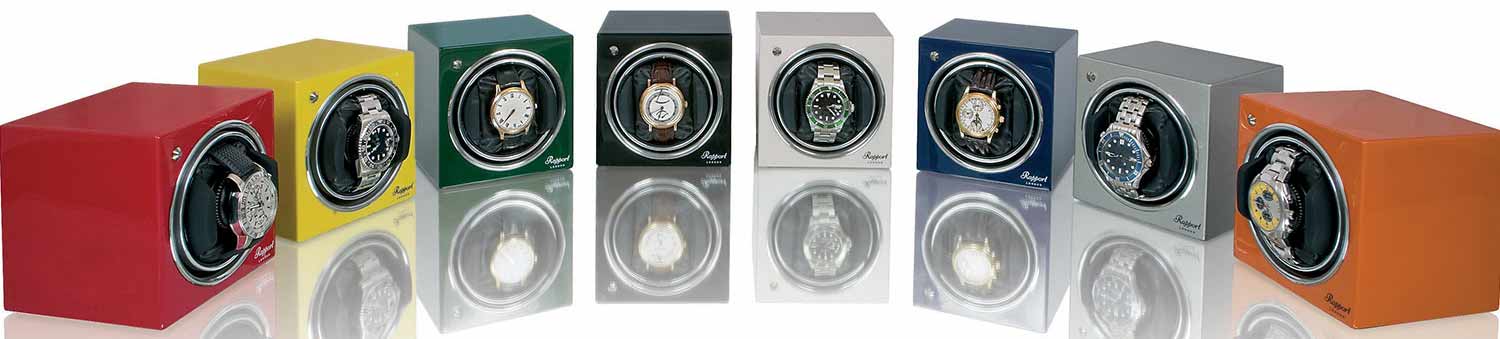
Rapport London EVO MK3: the best value for money
Scatola del Tempo: Italian craftsmanship with Swiss technology
A brief history of the watch winder
Why use an automatic watch winder?
An automatic watch left unworn will stop within 1 to 3 days, depending on its power reserve. That's not just an inconvenience — it's a risk for the movement itself.
When your timepiece remains stationary, the watch oils gradually congeal. Over time, the mechanism can seize. Moving parts lose their lubrication. Accuracy deteriorates. And resetting a complicated watch — perpetual calendar, moon phase, GMT — can be tedious and stressful for the crown seals.
An automatic watch winder solves all of this. By reproducing the natural movements of the wrist, it keeps the oscillating weight active, ensures continuous lubrication of the movement and preserves the accuracy of your timepiece — whether it's a Rolex Submariner, an Omega Seamaster or a Patek Philippe Grand Complications.
How does an automatic watch work?
An automatic watch harnesses the kinetic energy produced by the wearer's wrist movements. With each gesture, an oscillating weight (the rotor) pivots and winds the mainspring, storing the energy needed to power the movement.
The balance wheel — the heart of the calibre — controls the distribution of this energy through the gear train and ensures the watch's accuracy. As long as the spring remains tensioned, the balance wheel oscillates and the watch keeps time. Once the energy runs out, everything stops.
This is why a daily-worn automatic watch stays on time without intervention. And it's why a watch winder is essential as soon as you own several timepieces that you wear in rotation.
Worth knowing: a watch worn on the wrist can rotate its rotor more than 10,000 times per day. A quality watch winder reproduces a fraction of this movement — enough to keep your watch in perfect condition.
What winding program does your watch need?
The vast majority of automatic watches require between 1,000 and 1,900 turns per day (TPD) to function correctly. This figure varies depending on the calibre, its age and its complications.
The standard program: 1,600 turns per day
This is the reference program. It corresponds to 800 rotations clockwise and 800 anti-clockwise, spread over 24 hours. This level of rotation suits the vast majority of watches on the market — Rolex Submariner, Daytona, Air King, Omega, IWC, Breitling, TAG Heuer.
This is the program installed by default on Swiss Kubik watch winders — approved by Rolex — and adopted by the majority of quality winder manufacturers.
Rest phases: a decisive criterion
Between each rotation sequence, a quality watch winder pauses. During this rest phase, the mainspring relaxes naturally. This alternation of rotation and rest maintains a constant, intermediate tension on the hairspring — without over-winding, without premature wear.
Budget winders (under €100, Asian manufacture) often run continuously. This forces 100% winding for hours on end, unnecessarily stressing the mechanism and potentially damaging your watch's accuracy over time.
All watch winders in our selection include these rest phases. It's a non-negotiable criterion.
Stop in vertical position
Swiss Kubik and Rapport London winders systematically stop in the vertical position at 12 o'clock between each cycle. This "rest position" is optimal for preserving the balance wheel's regulation over the long term.
Programmable watch winders
Some older or specific calibres only require unidirectional winding (clockwise only, or anti-clockwise only). Others need a precise daily turn count. In these cases, a programmable winder is essential.
The Swiss Kubik Masterbox lets you define exactly the number of turns and direction of rotation via Bluetooth or USB-C from your smartphone. It adapts to the requirements of 100% of automatic watches on the market.
To find the exact winding program recommended for your watch, consult Rapport London's automatic watch winding database.
Safe storage, battery or mains: what are your constraints?
Watch winder in a safe
If your watch winder needs to operate inside a safe, the choice is simple: it must run on batteries, with enough autonomy to avoid frequent access.
Swiss Kubik and Scatola del Tempo offer the longest battery life on the market: 2 to 3 years with 2 Duracell Procell LR14 batteries. Unmatched. Most other brands prioritise mains connection — practical day-to-day, but incompatible with safe storage.
The Swiss Kubik Masterbox goes further: it automatically detects the power source and switches from mains to battery without interrupting the winding program. Once unplugged, it continues — without any intervention required.
Recommendation: use standard alkaline batteries only (Duracell, Energizer). Avoid rechargeable batteries — their variable voltage can disrupt the motor.
Watch winder on display
If your winder sits on your desk, bedside table or in your dressing room, finish becomes just as important as performance. Leather-covered? Anodised aluminium? Piano lacquer? Price naturally increases with material quality.
Swiss Kubik offers a Masterbox range in anodised aluminium (eloxage treatment for lasting resistance) or genuine leather. Rapport London's EVO MK3 features a multi-coat piano lacquer finish, hand-assembled. Two different approaches, two complementary aesthetic universes.
Which watch winder brands are approved by major watchmakers?
This is the most reliable selection criterion. A brand approved by Rolex, Patek Philippe or another major watchmaker has proven that its winders meet the winding requirements of their most precious calibres.
Swiss Kubik is the first brand to have been officially approved by Rolex. The Geneva-based manufacturer has created personalised winders for specific Rolex models. An absolute reference.
Scatola del Tempo (acquired by Swiss Kubik in 2019) has been recognised by Patek Philippe for many years.
Rapport London — founded in 1898, fourth-generation family business — is recognised for the quality of its mechanisms and the precision of its 9 winding programs including the settings recommended by Rolex and Omega.
All watch winders on La Boîte à Montres are CE certified and selected for their reliability, silent operation and compatibility with 100% of automatic watches. 3-year guarantee on all models — beyond the manufacturer's standard 2 years.
Which watch winder should you choose?
Does your watch have specific winding requirements?
For the vast majority of watches (Rolex, Omega, IWC, Breitling, TAG Heuer), the standard 1,600 TPD bidirectional program is perfectly adequate. A Swiss Kubik StartBox or a Rapport London EVO MK3 will meet this need.
For a Patek Philippe, an automatically wound pocket watch, or any calibre with specific requirements, opt for a programmable Swiss Kubik Masterbox.
Will your winder go in a safe?
Swiss Kubik StartBox or Masterbox — 2 to 3 years on batteries. Rapport London EVO MK3 — over 18 months. These are the only genuinely safe-compatible options.
Is it a premium gift?
The leather-covered Swiss Kubik Masterbox or the coloured aluminium finishes are exceptional objects. For Rapport London, each EVO MK3 colourway — including the Racing Green — is hand-assembled.
Swiss Kubik: the Swiss reference approved by Rolex
Hand-crafted at the Givisiez manufacture in Switzerland, Swiss Kubik watch winders are the only ones to have been officially approved by Rolex. Their direct-drive motor — no belt — guarantees maximum reliability and absolute silence.
Another unique technical advantage: certified magnetic neutrality at 0.07 mT — 85 times below ISO 764 standard. Your timepieces are protected from any magnetic interference, regardless of how long they remain in the winder.
The Swiss Kubik StartBox watch winder
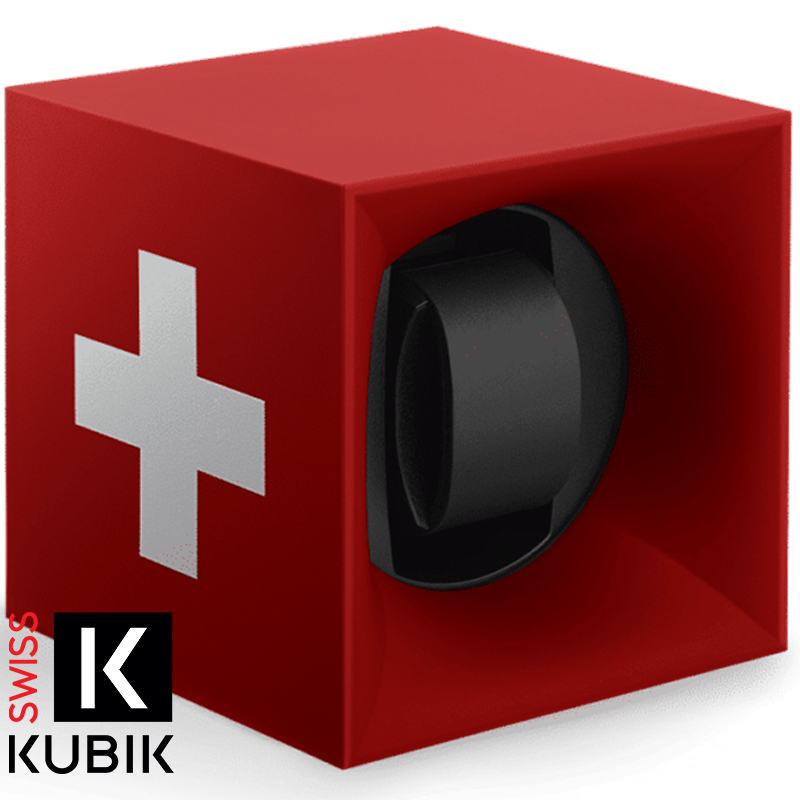
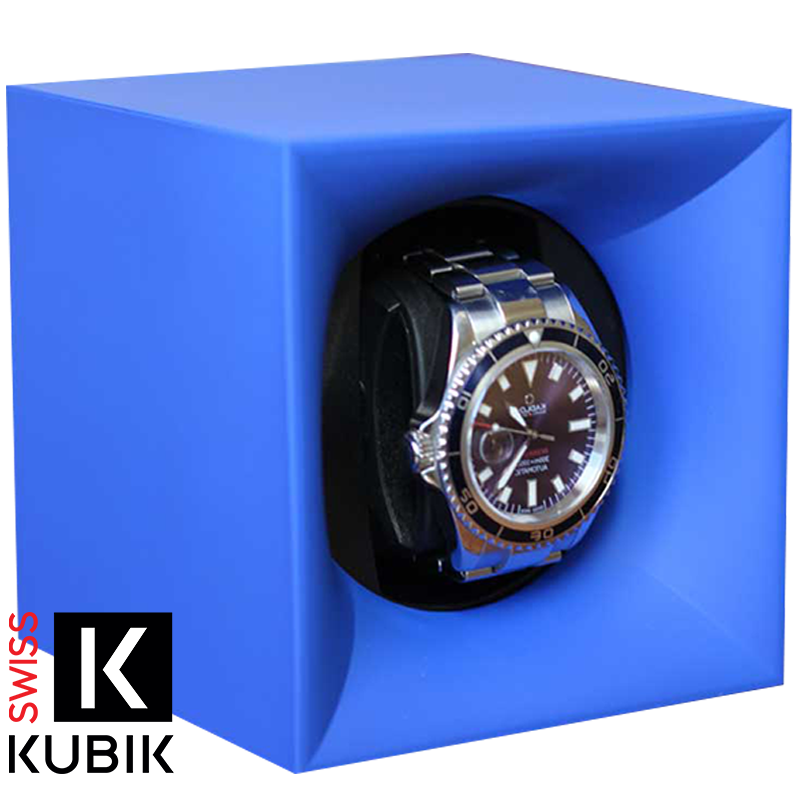
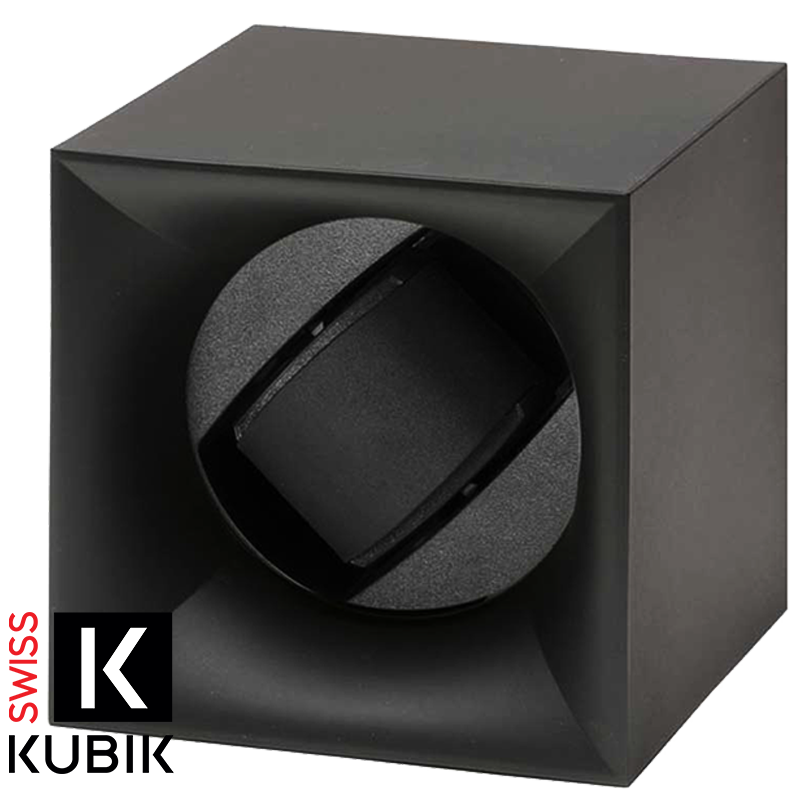
Swiss Kubik's entry-level model. Fixed program of 1,600 TPD, ABS Soft Touch finish, available in many colours. Ready to use from the moment you switch it on. Procell LR14 batteries included, 2 to 3 year autonomy.
The Swiss Kubik Masterbox: the programmable reference
Anodised aluminium casing (eloxage treatment) or genuine leather cover. Programmable via Bluetooth and USB-C from your smartphone (iOS and Android). Automatic mains/battery switching. Default program: 1,600 TPD — fully reconfigurable. Rolex approved.
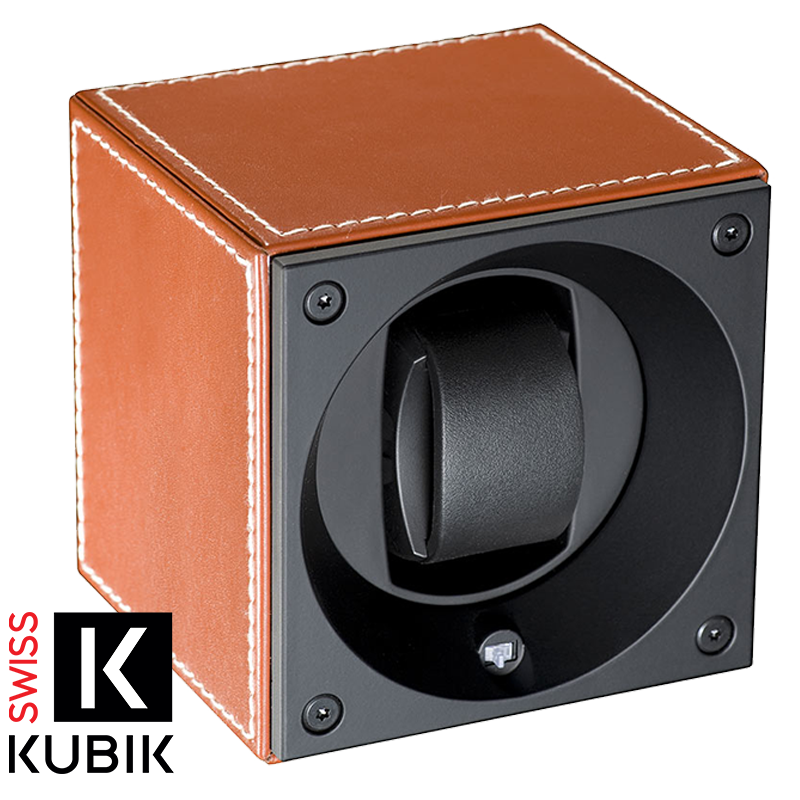
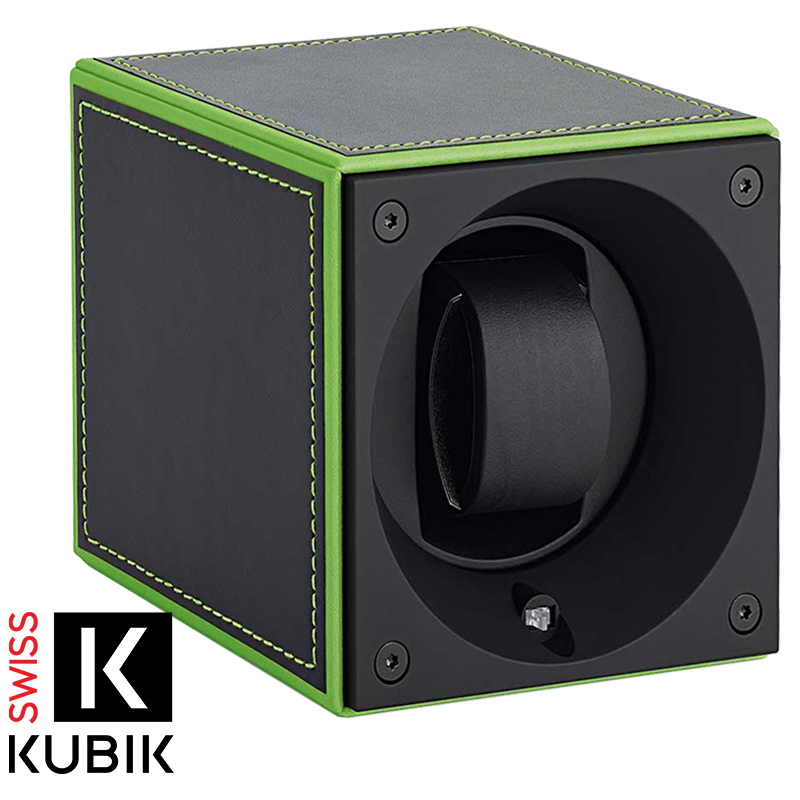
View the Swiss Kubik Masterbox
Rapport London EVO MK3: the best value for money
Founded in 1898 in London, Rapport is a fourth-generation family business. The EVO MK3 cube is its best-selling model worldwide — and for good reason: multi-coat piano lacquer finish, hand-assembled at the Paddington atelier, virtually silent direct-drive motor.
9 preset programs including the bidirectional 650 TPD cycle recommended by Rolex and Omega. Compatible with mains and LR14 batteries (over 18 months autonomy). Can be assembled in modules of 2 or 4 units.
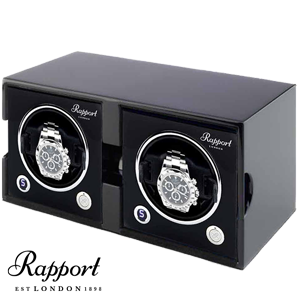
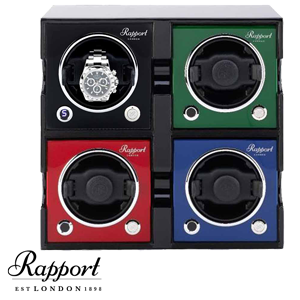
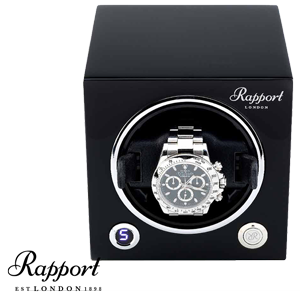
View the EVO MK3 Rapport London
Scatola del Tempo by Swiss Kubik: Italian craftsmanship with Swiss technology
Acquired by Swiss Kubik in 2019, the Italian house Scatola del Tempo benefits from Patek Philippe recognition and now uses Swiss Kubik motors. The perfect alliance between Italian artisanal expertise and Swiss watchmaking technology.
A brief history of the watch winder
Automatic movements are older than most people think. The principle dates back to 1777, developed by Louis Perrelet. The first production automatic watches only began in 1926 — and the first "watch turners" appeared in their wake.
Initially rudimentary, these devices have evolved considerably. Today's watch winders combine precision technology, contemporary design and noble materials — in a compact form with extended battery life. They are now an indispensable part of any serious automatic watch collection.
Need personalised advice?
Our team is available every day from 10am to 8pm to help you make the right choice.
Email: serviceclients@laboiteamontres.com
Phone: +33 9 80 84 88 08