

How to remove a watch strap: tools and techniques
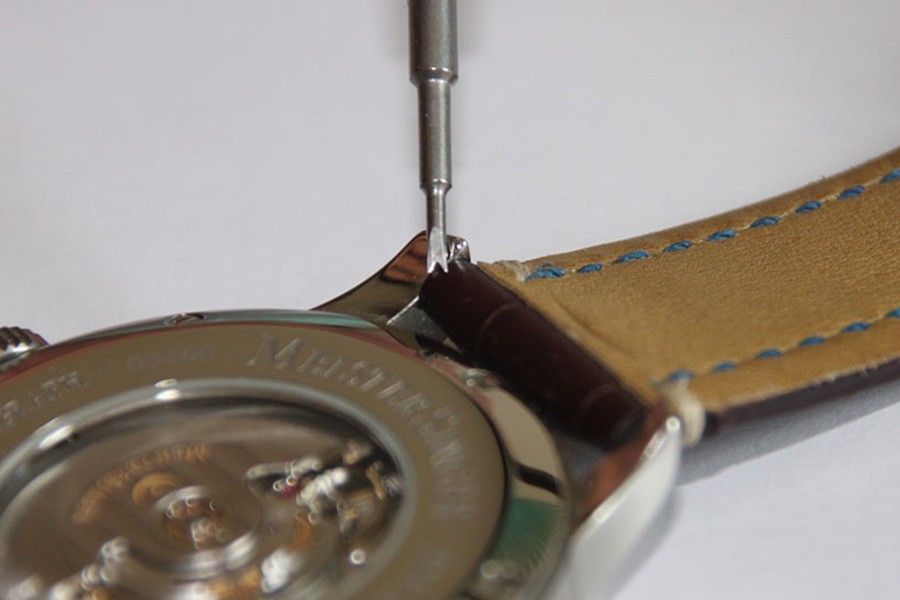
How to remove a watch strap without scratching the lugs? Full guide with videos: Bergeon 6767F tool, drilled vs solid lugs, Hirsch Quick Release and NATO strap.
How to remove a watch strap: the complete method
Changing a watch strap always begins with one unavoidable step: removing the one already fitted. Steel bracelet, leather strap or NATO strap — the technique varies depending on the attachment type. Done incorrectly, this can scratch your watch lugs or damage the spring bars.
In this guide, we show you how to proceed cleanly, with the right tools, for all common configurations.
Browse our NATO straps and our Bergeon spring bar tools available on our site.
The essential tool: the Bergeon 6767F
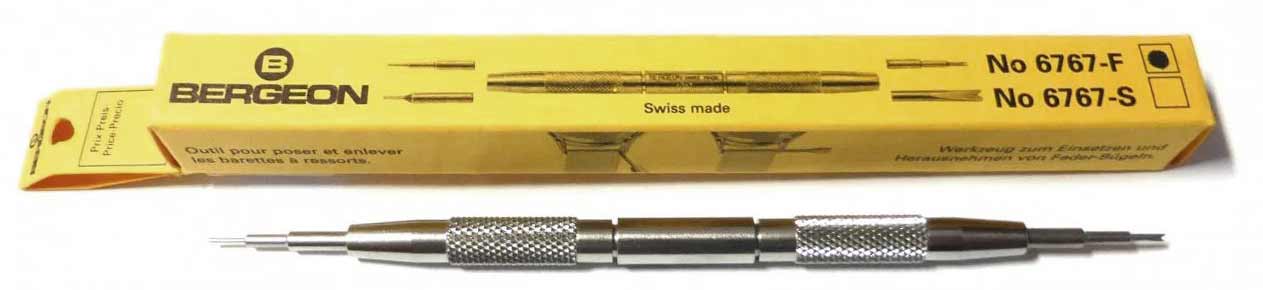
First and foremost, you need the right tool. The Bergeon 6767F is the professional reference used by watchmakers. Its ultra-fine stainless steel fork accesses spring bars with precision, even on the tightest lugs — without risk of slipping or scratching.
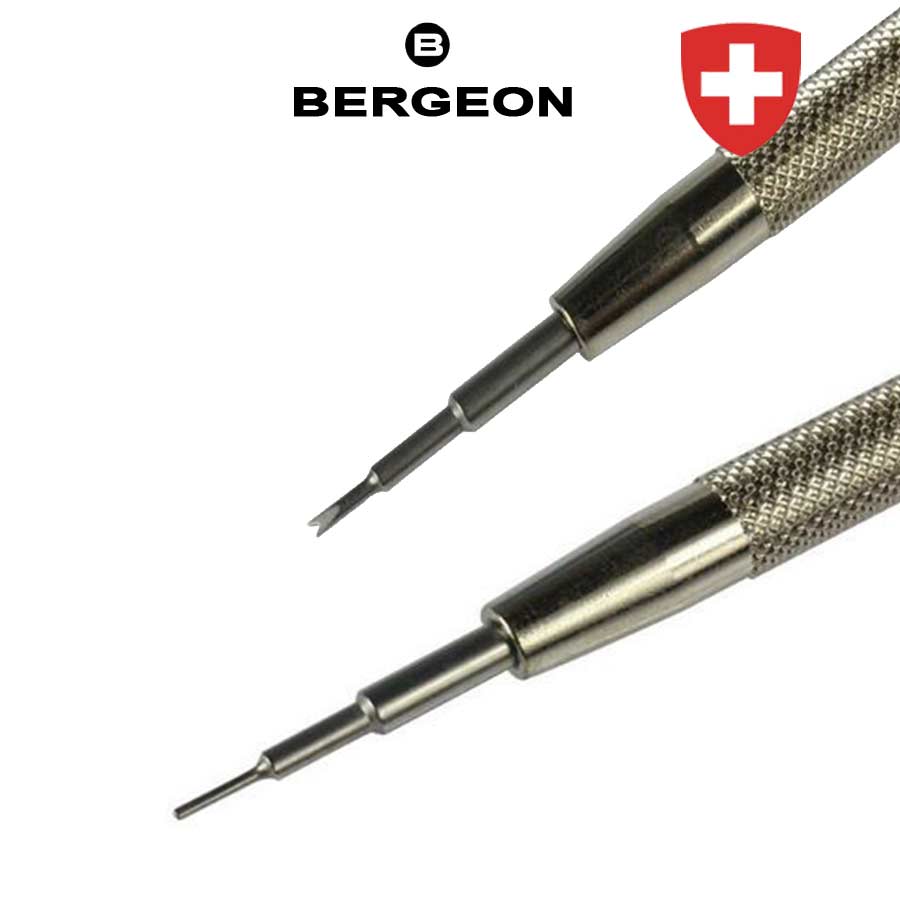
It has two different ends:
- Fine fork (6767F) — for watches with solid lugs: Rolex, Omega, IWC, Tudor, Seiko
- Standard tip — for watches with drilled lugs, accessed from the outside
A Swiss-quality tool that lasts for years. Essential from your very first strap change.
Video demonstration: the Bergeon 6767F in action
Understanding the two types of attachment
Before removing a strap, identify the type of spring bar on your watch:
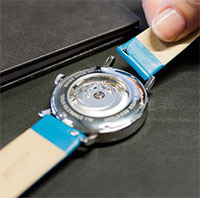
Standard spring bars
This is the most common attachment — found on 95% of watches on the market. The spring bar is a metal rod with an internal spring, housed between the two lugs of the case. It is compressed with a tool to release the strap.
Two sub-types depending on the watch:
- Drilled lugs — a small visible hole on the outside of the lug gives direct access to the spring bar pin. The tool enters from the outside.
- Solid lugs — no visible hole. The tool enters through the inner gap between the strap and the case, then pushes the pin inward to compress the spring bar.
Quick Release spring bars
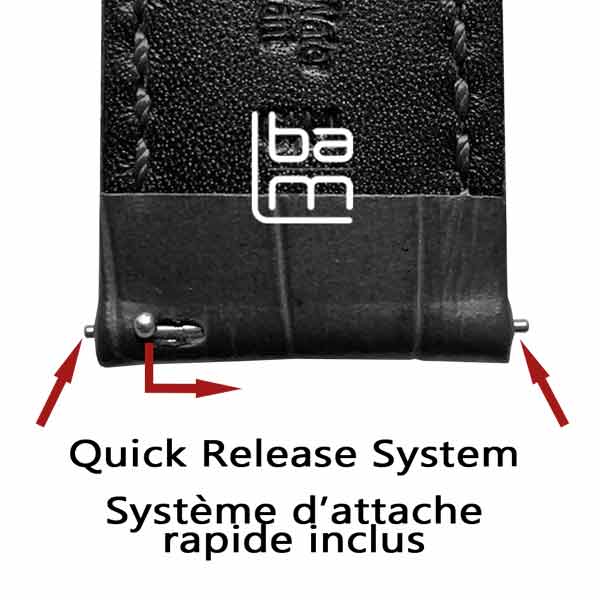
Certain premium straps — notably the Hirsch Quick Release range — incorporate a tool-free removal system. A small tab or lever on the spring bar itself allows it to be retracted with a simple press of the finger. Fast, practical, and with no risk of scratching.
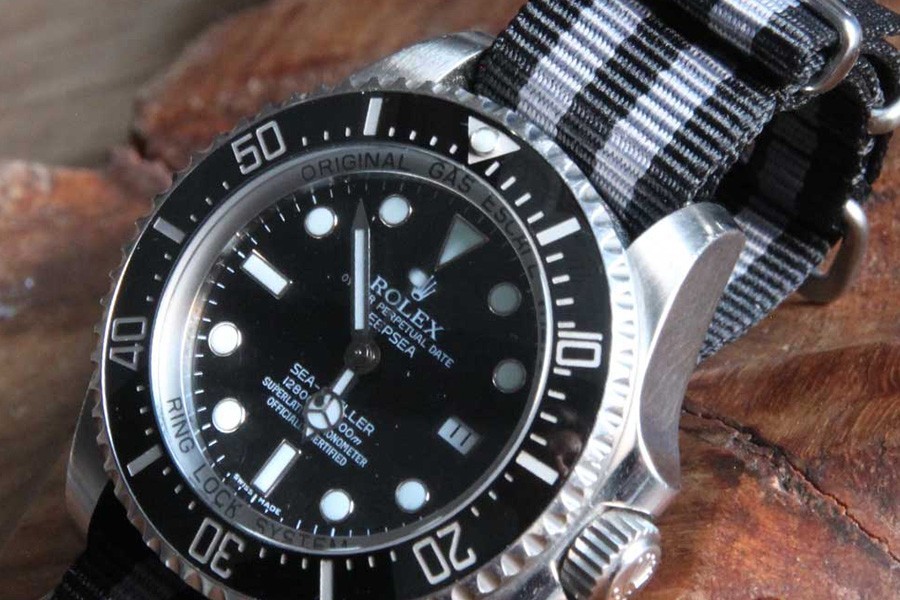
Removing a steel bracelet from a vintage Rolex GMT with the Bergeon 6767F
The vintage Rolex GMT has drilled lugs — the spring bars are accessible from the outside. This is the simplest configuration, and the one where the Bergeon 6767F excels.
Video demonstration: removing the Rolex GMT steel bracelet and fitting a black NATO strap
Step-by-step technique
- Place the watch face down on a folded microfibre cloth — never directly on a hard surface
- Insert the fine tip of the Bergeon 6767F into the outer hole at the watch lug
- Press gently and with control — the spring bar compresses and the strap slides outward from the lug
- Maintain the compression and remove the strap from one side
- Repeat on the other side (12 o'clock side)
- Retrieve both spring bars — they will be reused to attach the new strap
Tip: never force. A slip is the number one cause of scratches on lugs.
Removing a strap with the Hirsch Quick Release system
The Hirsch Quick Release system is the opposite of the previous technique: no tool, no risk of scratching, removal in under 10 seconds per side.
Video demonstration: quick fitting of a Hirsch Quick Release strap
How it works
Hirsch Quick Release straps are fitted with integrated trigger spring bars. A small metal tab at each end of the strap compresses the bar directly with a fingernail or finger — no tool required.
- Turn the watch over to access the inner face of the strap
- Locate the metal tab at the end of the strap, on the lug side
- Pull the tab toward the centre of the strap with your fingernail
- The spring bar compresses — remove the strap from the lug
- Repeat on the other side
Result: strap change in under 30 seconds, with no risk and no tools. Ideal for collectors who regularly alternate between several straps.
Removing a NATO strap
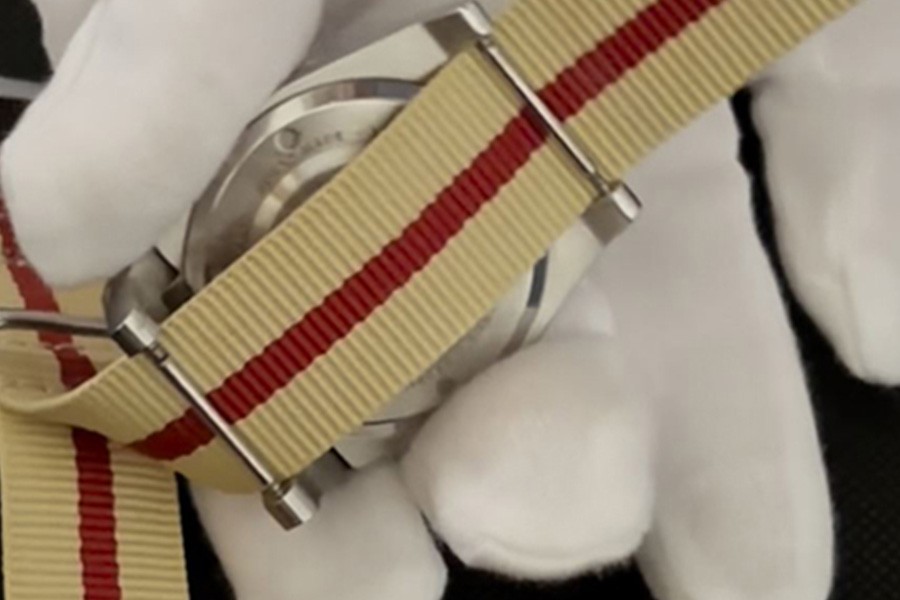
The NATO strap simply slides off. No tool needed! It can be swapped in seconds for a colour change...
The spring bars remain in the lugs — no need to remove them entirely if you are fitting another NATO strap straight away.
→ See our full guide: How to fit a NATO strap
Removing a leather strap
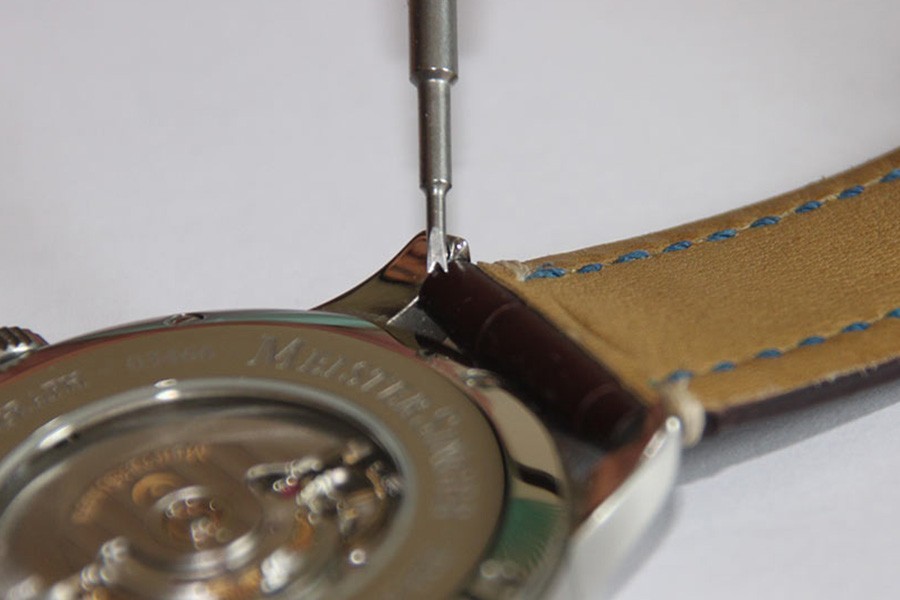
The technique is identical to that of a steel bracelet on solid lugs — Bergeon 6767F, same approach. As a leather strap is more flexible, it is sometimes easier to access the spring bar.
Step-by-step technique
- Place the watch face down on a folded microfibre cloth — never directly on a hard surface
- Locate the gap between the strap and the case lugs, starting at the 6 o'clock side
- Insert the fine fork of the Bergeon 6767F into this gap, flat against the inner lug
- Position the fork toward the spring bar pin (the small shoulder visible on the rod)
- Press gently and with control — the spring bar compresses and the strap slides outward from the lug
- Maintain the compression and remove the strap from one side
- Repeat on the other side (12 o'clock side)
- Retrieve both spring bars — they will be reused to attach the new strap
Tip: never force. If the fork slips, reposition it. A slip is the number one cause of scratches on lugs.
Common mistakes to avoid
- Using a screwdriver or knife — flat blades slip easily and scratch the lugs. Only the fine fork of the Bergeon 6767F guarantees a safe grip
- Forcing a stuck spring bar — if the bar resists, check you are correctly positioned on the pin. Never force sideways
- Losing the spring bars — they are small and fall easily. Work on a white cloth or pale surface so you can spot them immediately
- Placing the watch without protection — always work on a microfibre cloth or watchmaker's cushion to protect the dial and case
- Mixing up spring bar sizes — spring bars come in different lengths depending on lug width (1.5 mm standard diameter, but variable length). Always keep the original spring bars
FAQ — Removing a watch strap
Can a strap be removed without tools?
On watches with drilled lugs, it is sometimes possible to compress the spring bar with the tip of a pen or toothpick — but the risk of slipping and scratching is high. The Bergeon 6767F remains essential for solid lugs (Rolex, Omega, Tudor). Only Quick Release systems allow true tool-free removal.
How do I know if my watch has drilled or solid lugs?
Turn your watch over and look at the lugs from the side. If you see a small hole on the outer side of each lug — drilled lugs. If the lugs are smooth with no visible hole — solid lugs. The vast majority of Rolex, Omega and Tudor watches have solid lugs.
What should I do if a spring bar is stuck or corroded?
Do not force. A stuck spring bar may indicate corrosion or deformation. In this case, take the watch to a watchmaker — forcing it can damage the lugs or case. Replace the spring bar afterwards.
Can the original spring bars be reused?
Yes, as long as they are not deformed or oxidised. If you change straps regularly, periodically check the condition of the spring bars and replace them if worn — they cost just a few cents and are available in all standard widths.
What spring bar width do I need for my watch?
The spring bar length must match your watch's lug width (18, 20, 22 or 24 mm).
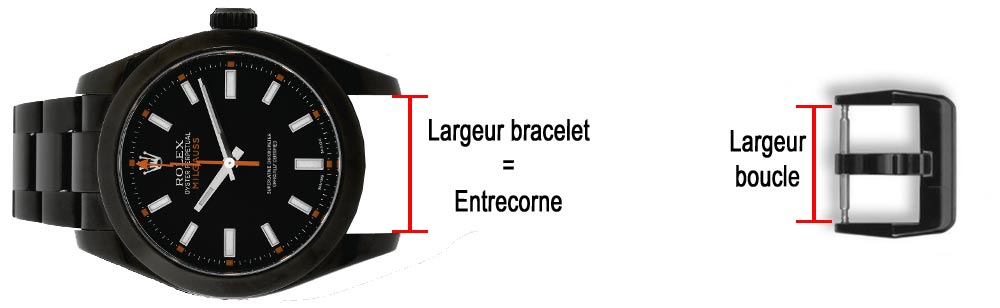
Here is an example measuring lug width on a Rolex: the photo shows a 20mm lug width measured with a ruler. The corresponding spring bar reference will therefore be "20mm".
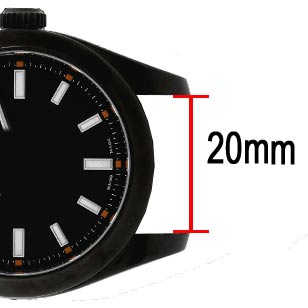
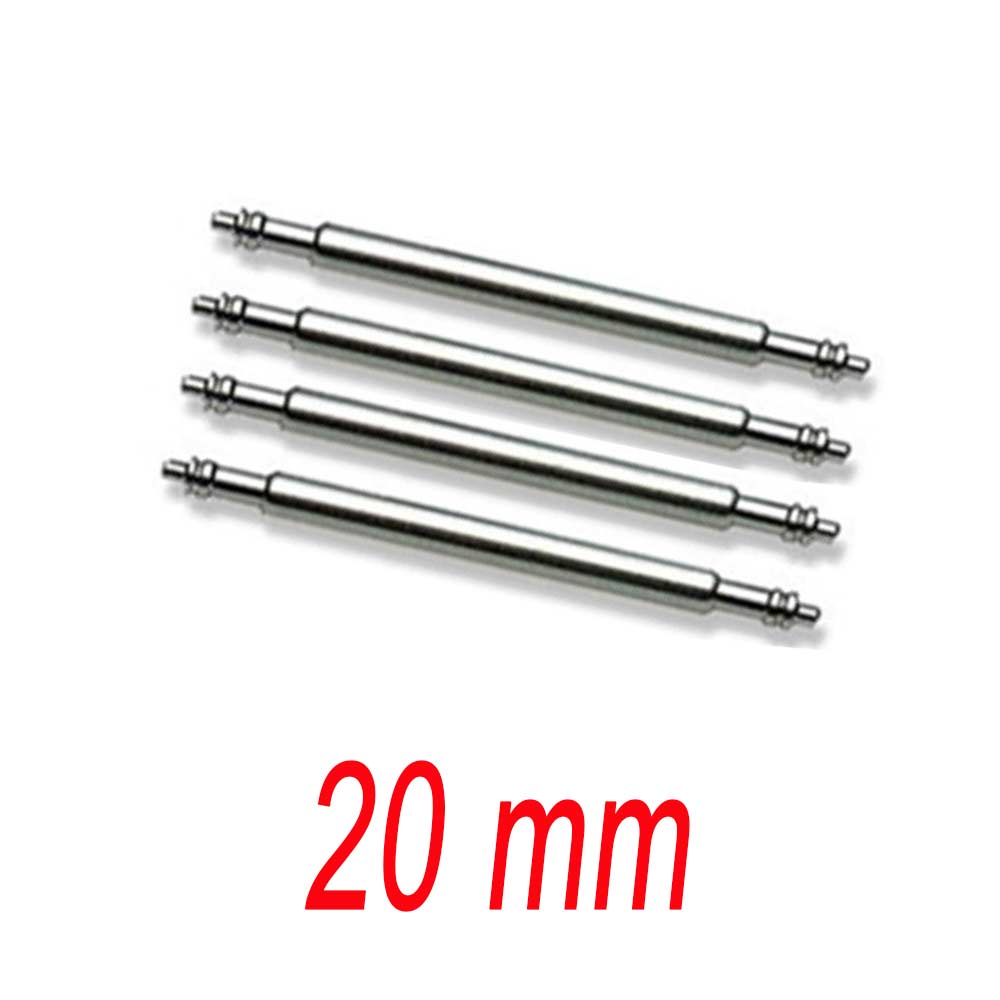
The standard spring bar diameter is 1.5 mm for the vast majority of sport and collection watches. Some vintage models use 1.8 mm — check before ordering. We recommend reinforced stainless steel spring bars of 1.8 mm diameter for greater security.
Reinforced 1.8 mm stainless steel spring bars are available on our site: Stainless steel spring bars
Our products for changing a watch strap
- Bergeon 6767F tool — fine stainless steel fork
- Reinforced stainless steel spring bars
- All HIRSCH straps
- HIRSCH straps 20mm
- All NATO straps
- 18mm NATO straps
- 20mm NATO straps
- 22mm NATO straps
- 24mm NATO straps
Follow La Boîte à Montres on social media:


Follow our tutorials, new straps and expert advice on Facebook and Instagram.